
- News
Caravan Leisure Battery Care Over Winter: A Practical Guide
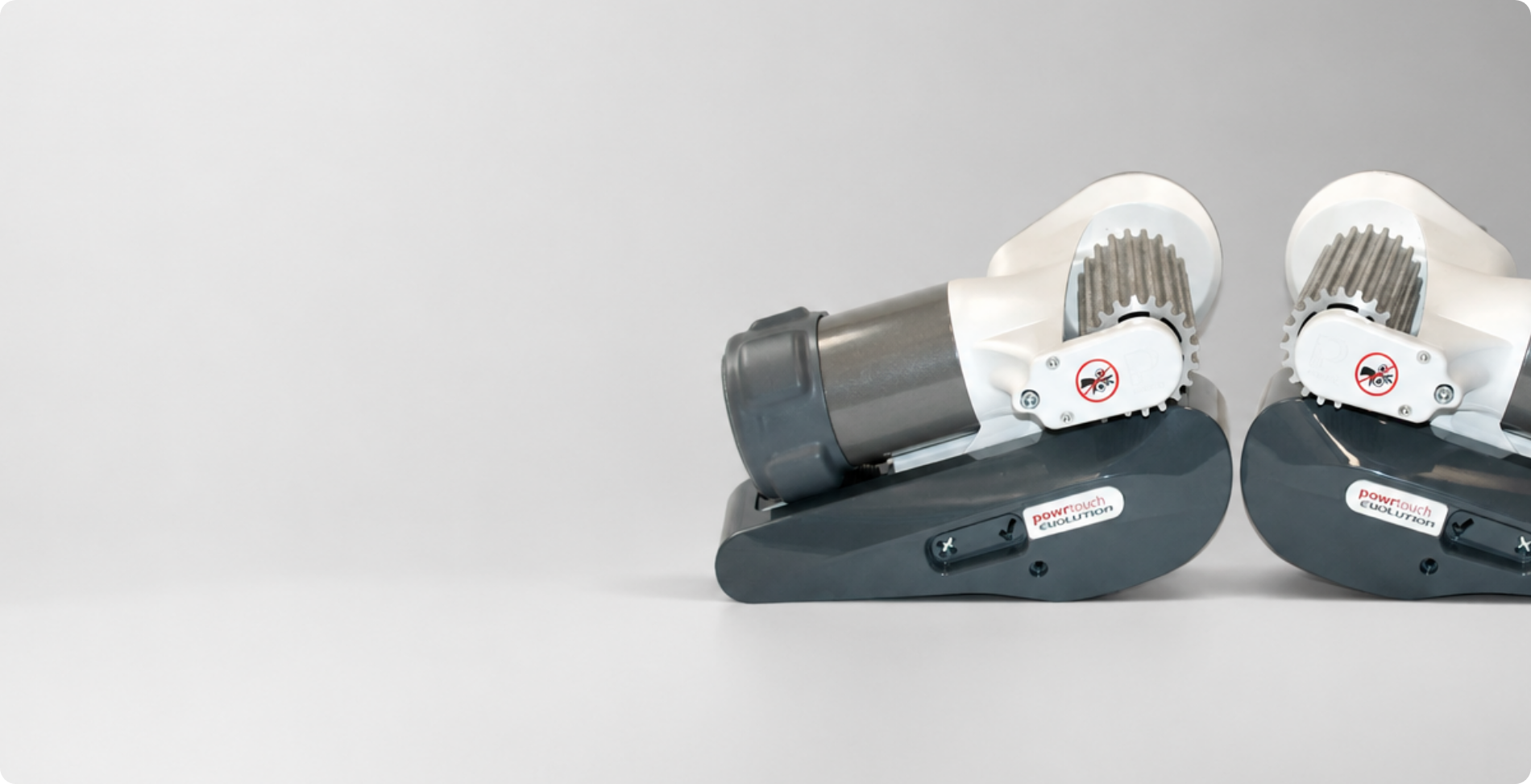
Looking after your caravan leisure battery over winter is simple. Charge it before storage, switch off equipment you do not need and check it regularly. Do not leave it discharged for long periods.
This matters because a motor mover relies completely on the leisure battery. A weak battery may run the caravan lights but struggle to move a fully loaded caravan.
Why do leisure batteries need winter care?
All batteries gradually lose charge while they are stored. Equipment such as an alarm, tracker or control panel may also continue to draw a small amount of power.
For lead-acid batteries, remaining discharged can cause sulphation. Crystals form on the internal plates, reducing the amount of energy the battery can store and supply. If this continues for too long, the loss of capacity can become permanent.
Cold weather also reduces the power a battery can deliver. A discharged lead-acid battery is more likely to freeze than a fully charged one. Lithium batteries have different limits, especially when charging in very low temperatures, so always follow the battery manufacturer’s guidance.
What should you do before winter storage?
1. Check which type of battery you have
Your battery may be flooded lead-acid, AGM, gel or lithium. Each type has different charging and storage requirements. Read the label and the manufacturer’s instructions before choosing a charger or charging setting.
2. Charge the battery fully
Use a compatible charger and charge the battery before the caravan goes into storage. Do not wait until it has been standing for several weeks.
3. Check the terminals
Make sure the terminals are clean, secure and free from corrosion. If you are unsure how to clean or disconnect a battery safely, ask a dealer or qualified technician.
4. Reduce background power use
Switch off the motor mover at its isolation switch and remove the key when the mover is not in use.
You may also be able to isolate or disconnect the leisure battery, but check first whether an alarm, tracker or other safety system needs power. Follow the caravan and battery manufacturers’ instructions.
5. Make a charging plan
Decide whether the battery will remain in the caravan or be removed, and how you will keep it charged. A battery in storage still needs regular attention.
Should you remove the leisure battery?
There is no single answer for every caravan.
Removing the battery may be useful if:
- The storage site has no mains power.
- You cannot visit the caravan regularly.
- You are concerned about theft.
- You have a suitable dry, secure and frost-protected place to store it.
Leaving the battery in place may be easier if:
- You can reach the caravan to check and charge it.
- An alarm or tracker must remain powered.
- You have a suitable power supply and charging arrangement.
- The battery is heavy or difficult to remove safely.
Whichever option you choose, keep the battery charged and follow its storage instructions. If you remove it, lift it carefully and keep it upright where the manufacturer requires this.
How often should you charge a leisure battery in winter?
A compatible smart charger may be able to maintain the battery automatically. Only leave a charger connected if both the battery and charger manufacturers confirm that it is suitable for long-term maintenance.
If continuous maintenance charging is not suitable or not possible, check the battery regularly and recharge it as instructed by the manufacturer. A reminder every four to six weeks can be a useful starting point, but the correct interval depends on the battery type, its condition, the storage temperature and whether anything is drawing power.
Keep these two points in mind:
- Use the correct charging mode. Lead-acid, AGM, gel and lithium batteries must be charged correctly. The wrong setting can reduce battery life or cause damage.
- Check the caravan’s built-in charger. Do not assume it is suitable for every battery type or for continuous winter charging. Check the caravan handbook or ask the manufacturer.
Why does battery condition affect the motor mover?
A caravan motor mover has no separate power source. It draws a high current from the leisure battery to move the caravan.
This is why battery weakness often appears when the mover is used. The lights or water pump may work normally, but the mover may run slowly, stop on a slope or cut out under load.
If this happens, fully charge the battery and check the terminals and isolation switch. If the problem continues, have the battery tested under load before assuming the mover is faulty.
Our caravan mover troubleshooting guide explains the first checks to make. Our winter storage guide covers the rest of the motor mover preparation.
How can you tell whether the battery is still healthy?
A voltage reading taken immediately after charging does not always show whether a battery can supply enough power to the mover. A damaged battery will often show a healthy voltage straight after charging and then fall away as soon as it is put under load.
Allow the battery to rest for the period recommended by its manufacturer, then check it using the correct method for that battery type. A proper load or capacity test gives the clearest picture of its condition.
In practical terms, the mover itself is a good indicator. If it moves the caravan forwards, backwards and through a turn each way without slowing or cutting out, the battery is coping. If it struggles on a fully charged battery, the battery is the more likely cause.
If you are unsure, ask a battery specialist, caravan dealer or the Powrtouch technical team for advice.
Mover not working properly after winter?
If the battery and connections are in good condition but the mover is still not working correctly, the Powrtouch technical team can help you find the cause.
Frequently asked questions
Should I remove my caravan leisure battery over winter?
Not always. Removing it can be useful when the caravan has no power supply or is difficult to visit. Leaving it in place is fine if you can check and charge it safely. Make sure any alarm or tracker still receives the power it needs.
How often should I charge a leisure battery in storage?
Follow the battery manufacturer’s instructions. If a compatible maintenance charger cannot be left connected, a check every four to six weeks is a useful starting point. The right interval will depend on the battery and storage conditions.
Can one winter ruin a leisure battery?
Yes. A lead-acid battery that remains discharged can suffer permanent sulphation. A discharged lead-acid battery is also more vulnerable to freezing. Other battery types have different risks, so follow the manufacturer’s storage guidance.
Why will my caravan mover not work after winter?
The leisure battery is one of the first things to check. Make sure it is fully charged, the terminals are secure and the mover’s isolation switch is on. If the battery cannot supply enough power under load, the mover may slow down or cut out.
Does a motor mover drain the leisure battery during storage?
The mover should be switched off at its isolation switch when it is not in use. The battery will still lose charge naturally, and other caravan equipment may continue to draw power. This is why regular checks are important.
Look after the battery and it will look after the mover
Powrtouch movers are designed and made in the UK and include a five-year guarantee, subject to the guarantee terms.
Read our useful tips · Browse support guides · Find your nearest dealer